 Image 1 of 1
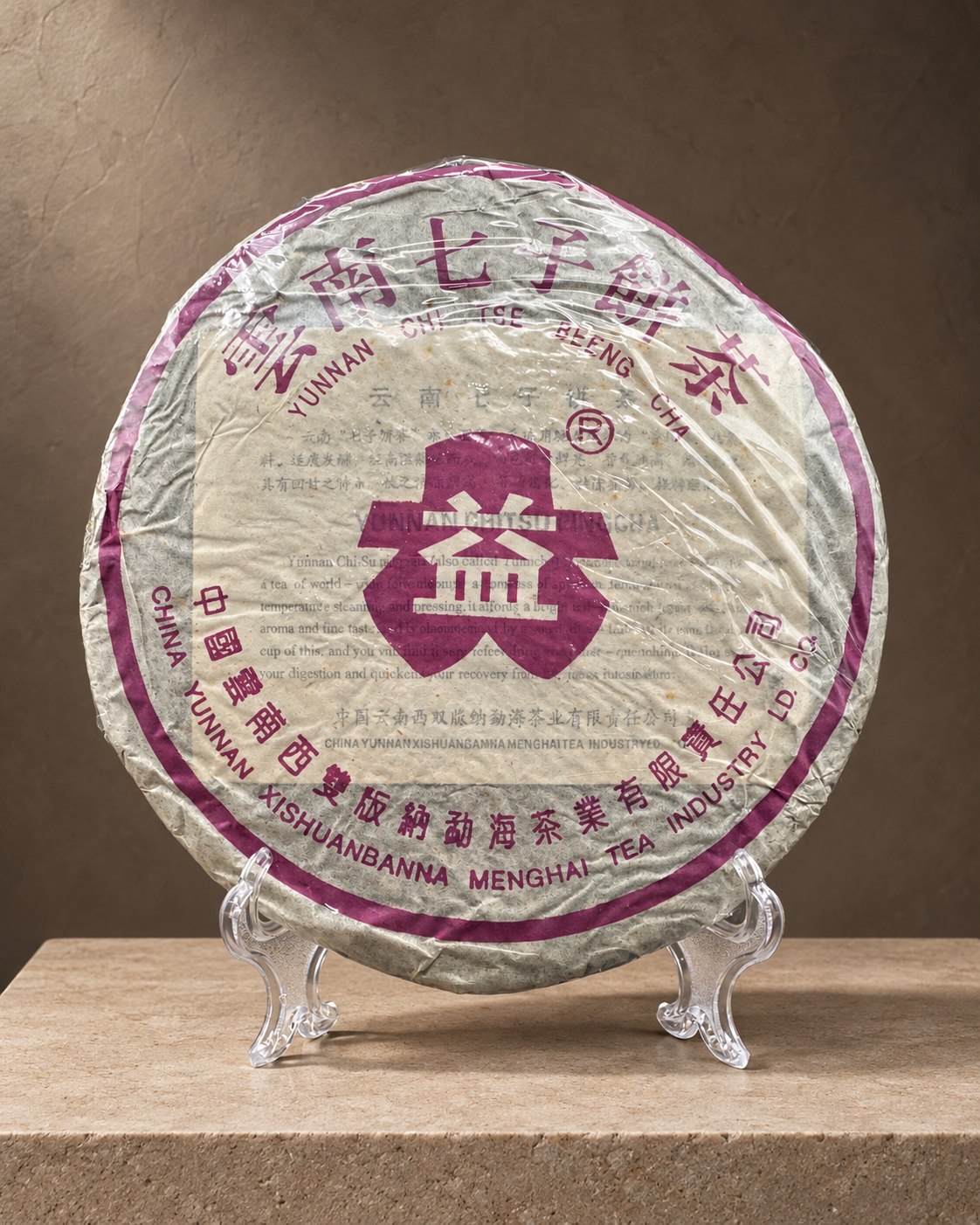
2006 紫大益 雲南七子餅茶 7542 大葉青餅 | Round Pressed Tea | 2006 Vintage
A distinctive expression of Yunnan's celebrated Pu’er tea heritage, the 2006 Purple Dayi Yunnan Chi Tse Beeng Cha 7542 Large Leaf Raw Pu’er combines the historic reputation of the Dayi (大益牌) brand with the enduring appeal of traditionally aged Chinese pressed tea.
Recognized by its distinctive purple Dayi (紫大益) presentation, this vintage reflects a recognizable chapter in the development of Menghai's Pu’er tea tradition. The 7542 recipe is among the most celebrated formulations associated with Menghai Tea Factory, admired for its balanced composition, structured character, and remarkable ageing potential.
Crafted from Yunnan large-leaf tea material, this 2006 vintage has reached two decades of maturation. Through natural ageing, the youthful intensity of raw Pu’er can gradually evolve into a more refined drinking experience, revealing deeper woody aromas, mellow sweetness, and a smoother, more integrated texture.
Preserved within our family's tea collection, this vintage pressed tea offers a connection to Yunnan's traditional tea-making craftsmanship. Its distinctive purple packaging, historical significance, and potential for continued transformation make it an intriguing addition for collectors and enthusiasts exploring the world of aged Pu’er.
Menghai County, Xishuangbanna, Yunnan Province, China
Located in southwestern Yunnan, Menghai is one of China's most historically significant Pu’er tea-producing regions, renowned for its subtropical climate, mountainous tea gardens, and generations of tea-making expertise.
The Dayi (大益牌) brand is closely associated with Menghai Tea Factory, whose traditional blending and pressing techniques helped establish many of the recipes recognized in modern Pu’er tea culture.
The Purple Dayi (紫大益) designation refers to the distinctive purple-coloured packaging associated with certain Dayi pressed teas, distinguishing their presentation from other traditional wrapper styles.
The 7542 recipe, first formulated in the 1970s, is among Menghai's most recognizable raw Pu’er blends. Its four-digit designation follows the traditional Pu’er recipe numbering convention:
75: Recipe formulation associated with 1975.
4: Grade-four leaf blend designation.
2: Menghai Tea Factory identification code.
Traditionally crafted using Yunnan large-leaf tea material, this recipe is appreciated for its structured profile, balanced bitterness, and capacity to develop increasing complexity through ageing.
Aroma: Aged Wood · Dried Plum · Subtle Herbal Notes
Taste: Mellow Sweetness · Dried Fruit · Gentle Bitterness · Woody Undertones
Body: Medium to Full · Smooth · Structured
Finish: Lingering Hui Gan (回甘) · Delicate Sweetness · Subtle Mineral Notes
Character: Mature · Balanced · Layered · Complex
Flavour notes represent the anticipated characteristics of aged raw Pu’er rather than a verified tasting of this specific pressing. Actual flavour depends on storage conditions, leaf composition, and brewing methods.